
As modern workflows are becoming more intricate and highly volatile, businesses look for ways to keep all processes visible, but without compromising security. Today, we are talking to Carl Tyler, the founder of Epilio, who will share how his team addresses these needs via a special solution based on the DHTMLX JavaScript Kanban Board and the HCL Domino platform.
Could you please tell us about your project and how DHTMLX Kanban fits in?
The company’s name is Epilio. We are headquartered in New Hampshire, USA, and primarily specialize in building solutions based on HCL Domino, as well as integrating other popular platforms like Office 365. We have been working in the industry for more than 20 years, and during that time, many Fortune 500 companies and government agencies around the world have become our customers.
Many of our customers choose sovereign applications, meaning they prefer to host apps themselves rather than depend on public cloud providers such as Amazon or anything like that. Therefore, many of them rely on HCL Domino, a platform that has been around for decades and is still widely used in various sectors, especially highly regulated ones, even if it is not always visible publicly. Taking it into consideration, we built Epilio Kanban Boards hosted on the Domino service. This solution uses the DHTMLX Kanban toolkit to provide the UI for Kanban boards and their key elements. The UI and data are stored within a single Domino database.
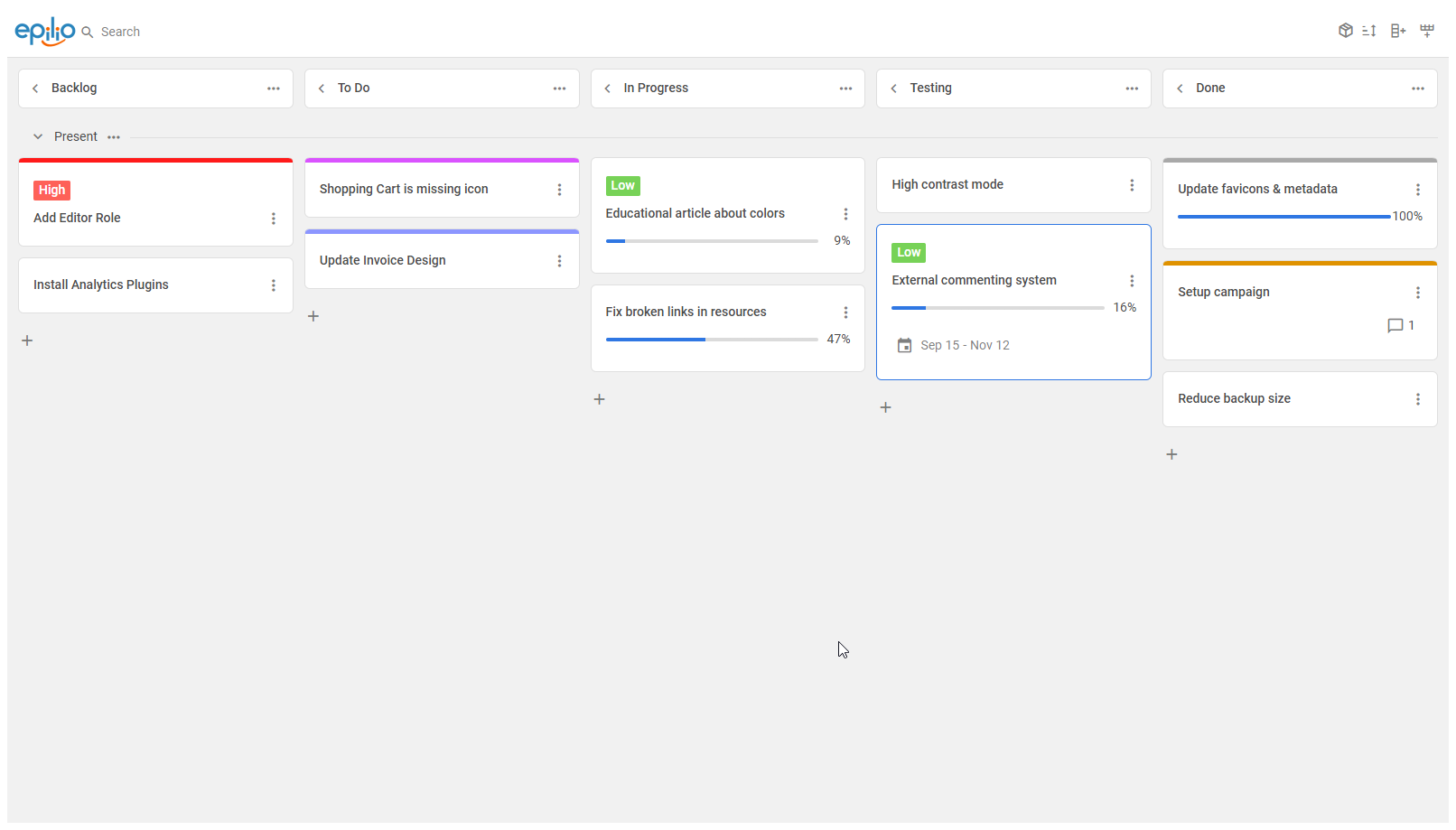
Domino’s architecture differs from a traditional relational database. Conceptually, Domino is closer to document-based systems like MongoDB, meaning it is more suitable for storing different types of data than handling many transactions. Therefore, we had to rework some aspects of how the Kanban operates within the system. As a result, customers can simply deploy a Domino app and get a fully functional Kanban system with multiple boards to bring clarity and control to their projects.
Which goals does DHTMLX Scheduler help you achieve in your project?
Using DHTMLX Kanban, we managed to create an intuitive interface, enabling users to visualize and manage their workflows in a clear and familiar way. Users can create templates with predefined structures, which allow building new boards faster. At the same time, we used widgets from the Suite UI widgets library, such as toolbars and layout elements, to build the surrounding UI elements for our solution.
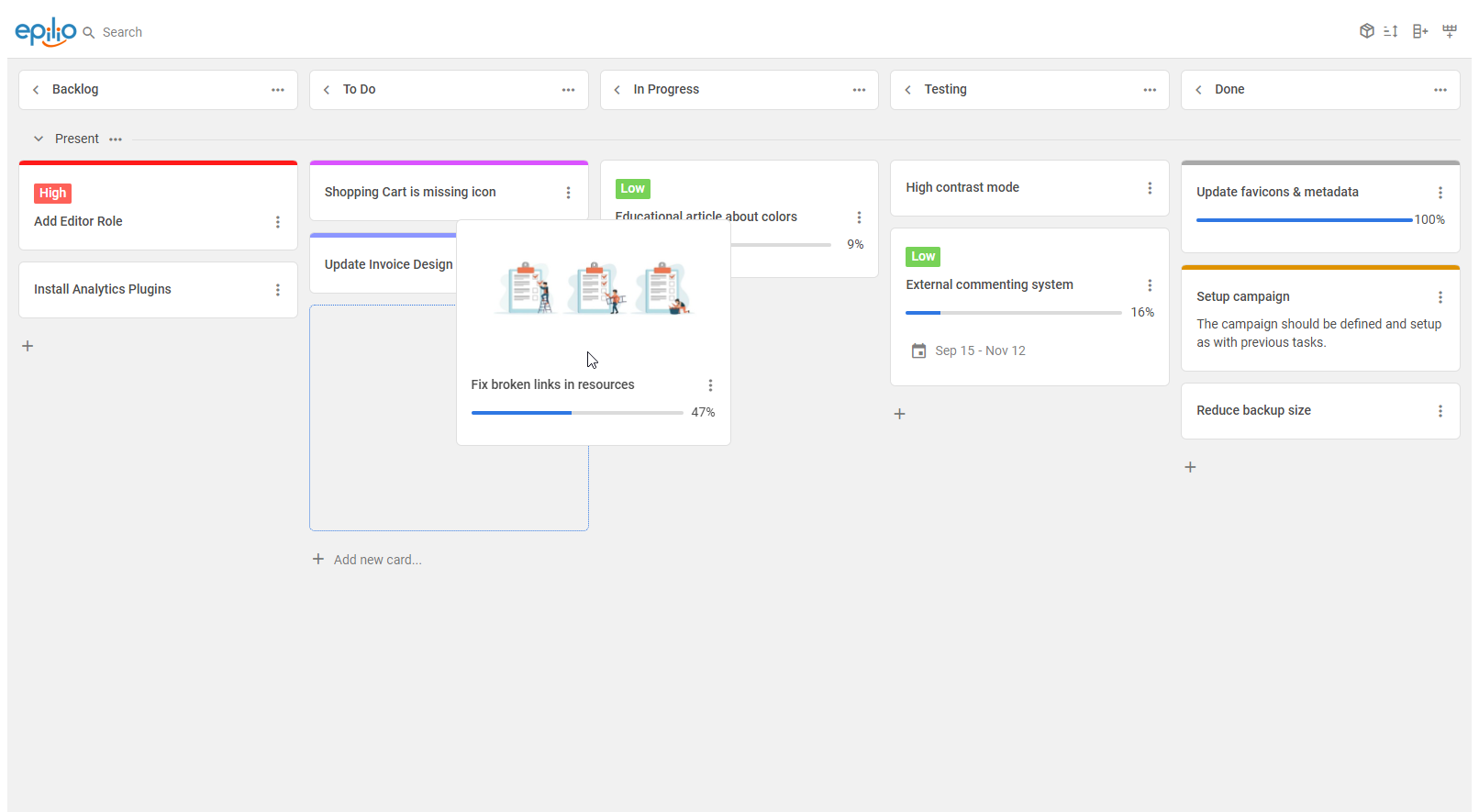
Our system includes email notifications, so users receive updates about all items assigned to them, including their priority and status, on a daily, weekly, or monthly basis. Another useful option is the ability to highlight tasks that are specifically assigned to a user, so they can quickly focus on their own work.
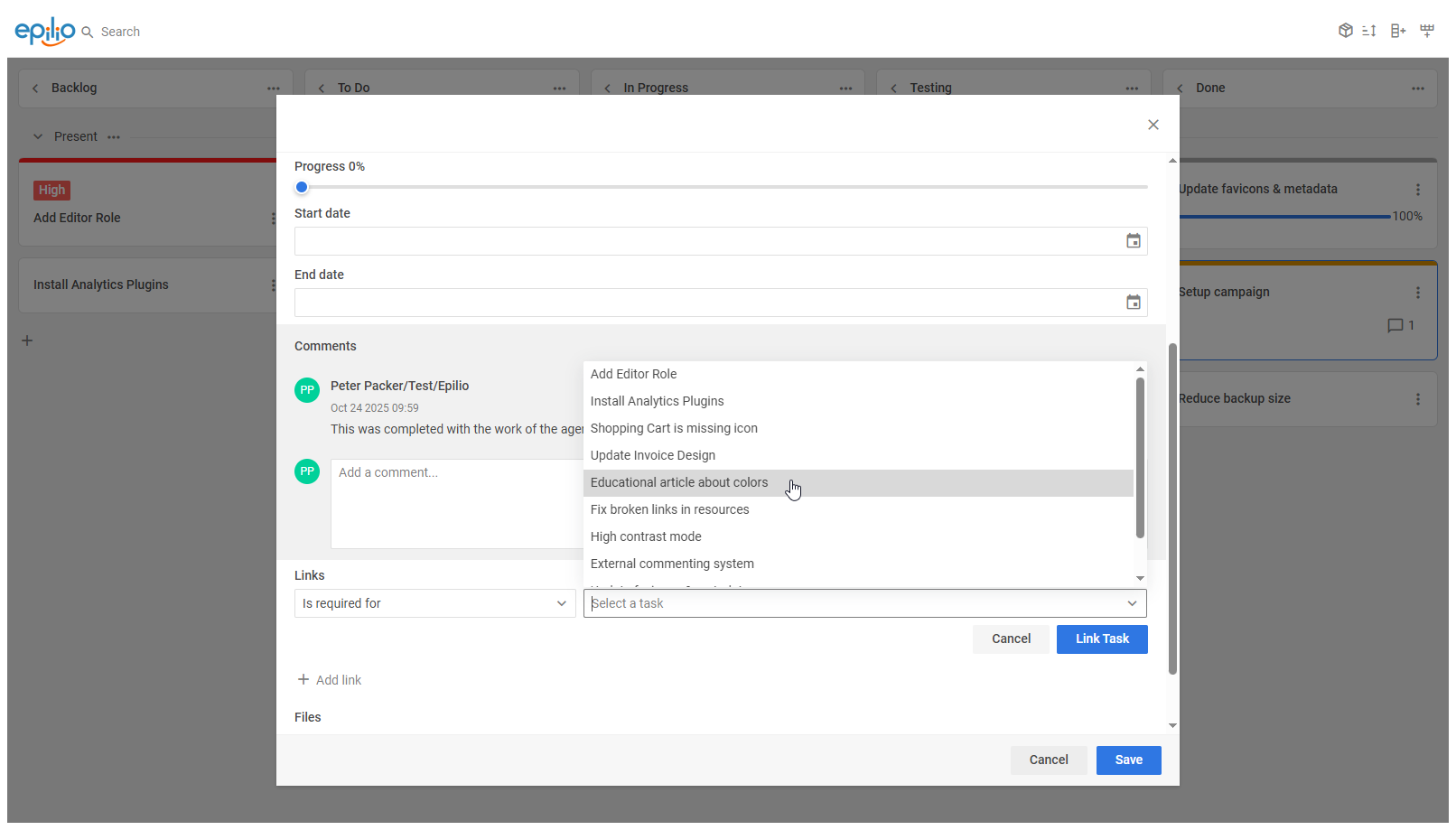
In general, DHTMLX Kanban helps us deliver a flexible and user-friendly interface on top of a secure, self-hosted infrastructure.
Why did you choose our JavaScript Kanban over other components available in the market?
There are a couple of reasons why we chose DHTMLX. First of all, I have to point to the well-documented API, so it is fairly easy to integrate DHTMLX components with other technologies. One more thing that distinguishes DHTMLX documentation from other vendors is the availability of live examples for every method or property, which really helps in developing solutions.
Another important factor is an active community forum, where DHTMLX users exchange experiences and help each other. The DHTMLX team is also heavily involved in forum discussions and solving emerging issues. In the past, when I found and reported bugs, you addressed them in a timely manner.
In fact, I also had a prior experience with DHTMLX. Many years ago, I actually used your old DHTMLX Calendar. When I was in an airplane flying club, I used this tool in the scheduling system, so people could book an airplane, and I think that it is still in use.
Did you face any issues when working with DHTMLX Kanban?
The key issue for us was related to ensuring fully self-contained deployments. The thing is that some pointers to fonts in DHTMLX Kanban were hardcoded. So we had to go through the JavaScript and CSS files to remove hard links, ensuring that everything runs 100% self-contained. For instance, one of our customers uses the solution on ships that may temporarily have no internet connection, so everything must work offline.
The same issue occurs when you update the Kanban. Each time this happens, we have to review and update the CSS and JavaScript files to make sure they point to local resources instead of external CDNs.
We also had to make some adjustments to better fit our environment. DHTMLX Kanban allows prepopulating the list of users. It didn’t work for us, since some of our customers have directories with thousands of names. Preloading large lists was not practical, so we had to do some work there as well.
Overall, our experience with DHTMLX has been very positive, and your support team has been amazing. When I had issues, I sent an email and always received a response with a vivid example of how this or that thing was supposed to work. At the moment, we don’t have any outstanding issues with DHTMLX.
What are your plans for the near future?
We only launched the solution at the very end of last year, so many customers are currently evaluating it. Also, we are considering the possibility of using other DHTMLX components, such as Gantt and To Do List, and incorporating them into the same Domino-based solution next. We are also exploring features like PDF export, which would likely require a separate service that can be called from the Domino server.
Which frontend and backend technologies are used in your project together with DHTMLX Kanban?
On the frontend, we use DHTMLX Kanban in combination with jQuery and Bootstrap. On the backend, as mentioned earlier, our solution relies on HCL Domino.
Thank you very much, Carl, for these valuable insights. We wish you every success and look forward to further expanding our partnership in the future.
For more exciting stories about real-life use cases with DHTMLX components, check out our collection of customer spotlights.