



You can build a Vue Gantt timeline for large-scale projects with thousands of tasks while keeping the integration simple and production-ready. The component is designed to work with Vue 3 and uses a declarative setup, so most configuration is passed through props. This keeps the integration straightforward and lets the chart fit naturally into Vue's reactivity model.
DHTMLX Vue Gantt chart library provides multiple configuration layers for adjusting both the appearance and behavior of the chart. You can use props for the main setup, templates for visual output, and customization hooks for more specific UI or interaction changes.
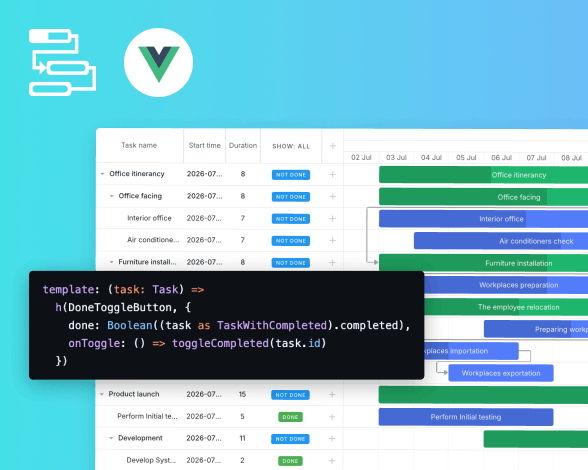
The wrapper extends the Gantt template system so that template functions can render Vue components directly in timeline bars, grid cells, scale cells, and tooltips. For example, if the built-in inline editors do not fit your workflow, you can replace or extend them through the inline editing layer.
The Vue Gantt component can use Pinia as the source of truth for Gantt state, with UI updates handled through wrapper callbacks. This approach keeps task data, links, and configuration in a centralized Vue store, while the chart stays in sync with the rest of the application. For larger datasets, heavy auto-scheduling, or bulk updates, the chart and backend can take over more of the data lifecycle to reduce the amount of state management in Vue.

 Vue.js